From first cut to final third
The cigar guide
A plain-language reference for new smokers and a quick refresher for experienced ones. Learn what the terms mean, how different cuts work, how cigars are built, and what to check when a smoke is not behaving.
Tobacco notice: Cigars contain nicotine and are not risk-free. This guide is educational and intended for adults of legal tobacco-purchasing age.
A calm first smoke
Start here
Choose
Ask for a well-stored cigar in a comfortable size and strength. “Mild” describes perceived intensity, not safety.
Inspect
The wrapper should look intact. A cigar may feel resilient when gently handled, but squeezing can crack it.
Cut
Remove only enough of the cap to open the draw. Cutting below the shoulder risks unraveling the wrapper.
Light
Toast the foot evenly, then take gentle puffs while rotating. Keep the flame near the tobacco rather than burying it in the foot.
Pace
Take slow, relaxed draws—often around one every minute. Smoking too quickly can make the cigar hot, harsh, or bitter.
Finish
There is no required stopping point. When it stops being enjoyable, place it in the ashtray and let it go out naturally.
Opening the head
Cigar cuts
The best cut preserves the cap while creating a comfortable draw. Cut conservatively—you can remove a little more, but the leaf cannot be put back.
Straight cut
Also called: guillotine cut.
A clean slice across the cap. It exposes a broad opening and works with most parejos. Double-blade cutters support the cigar from both sides.
Useful for: A versatile everyday cut and larger ring gauges.
V-cut
Also called: wedge or cat’s-eye cut.
A blade removes a narrow wedge from the cap, creating a concentrated channel while leaving more of the cap intact.
Useful for: Medium-to-large ring gauges. Depth varies by cutter.
Punch cut
Also called: bullet cut.
A circular blade removes a small plug from the center of a rounded cap. It is compact and helps contain loose tobacco.
Watch for: It may feel restrictive and generally does not suit pointed heads.
Pierce
Also called: pinhole cut.
A narrow tool punctures the cap instead of removing a section. It is less common and may create a tight or concentrated draw.
Watch for: Forcing a dull point can split the cap.
Cap twist or bite
Some pigtail caps are designed so the tail can be carefully twisted or pulled open. Biting is traditional but imprecise and can tear the wrapper.
Useful for: Only cigars whose cap construction supports it.
Cutting a figurado
Start with a small straight cut near the pointed tip and test the draw. Widen it gradually if needed. Some smokers use an angled cut to direct smoke.
Useful for: Torpedoes, pyramids, and belicosos.
An even beginning
Lighting & smoking
Soft flame
Butane lighters and long wooden matches are common choices. Allow a sulfur match to burn cleanly before bringing it to the cigar.
Torch flame
Useful outdoors and for precise touch-ups, but concentrated heat can scorch the wrapper. Keep distance and keep the cigar moving.
Toast the foot
Rotate the cigar near the flame until the edge begins to glow. This prepares the foot before drawing through it.
Check the burn
Gently blow across the foot to reveal dark spots. Touch up only the lagging area rather than repeatedly blasting the entire cigar.
Do not inhale
Cigar smoke is generally tasted in the mouth and expelled. Nicotine is still absorbed even without inhaling.
Let the ash fall
Ash can insulate the ember, but there is no prize for the longest tower. Rest it over an ashtray and let it release without striking or crushing it.
Protect the tobacco
Storage & humidification
Consistency matters more than chasing one perfect number. Many smokers keep premium cigars around the mid-60s to roughly 70% relative humidity near normal room temperature, then adjust for climate, container, and preference.
Humidor
A container designed to moderate humidity. Wood-lined humidors require preparation and periodic checks; airtight plastic containers are a practical alternative.
Hygrometer
Measures relative humidity. Verify or calibrate it when possible—an attractive display is not automatically an accurate one.
Too dry
Wrappers may become brittle and combustion can accelerate. Rehydrate gradually; rapid humidity changes can split tobacco.
Too wet
Cigars may swell, draw tightly, burn poorly, or resist lighting. Reduce humidity gradually and check airflow.
Temperature
Avoid prolonged heat and direct sunlight. Stable, moderate conditions help protect aroma and discourage tobacco beetle activity.
Cellophane
Cellophane protects against handling and slows moisture exchange but does not create an airtight seal. Keeping or removing it is often a storage preference.
Head to foot
Parts of a cigar
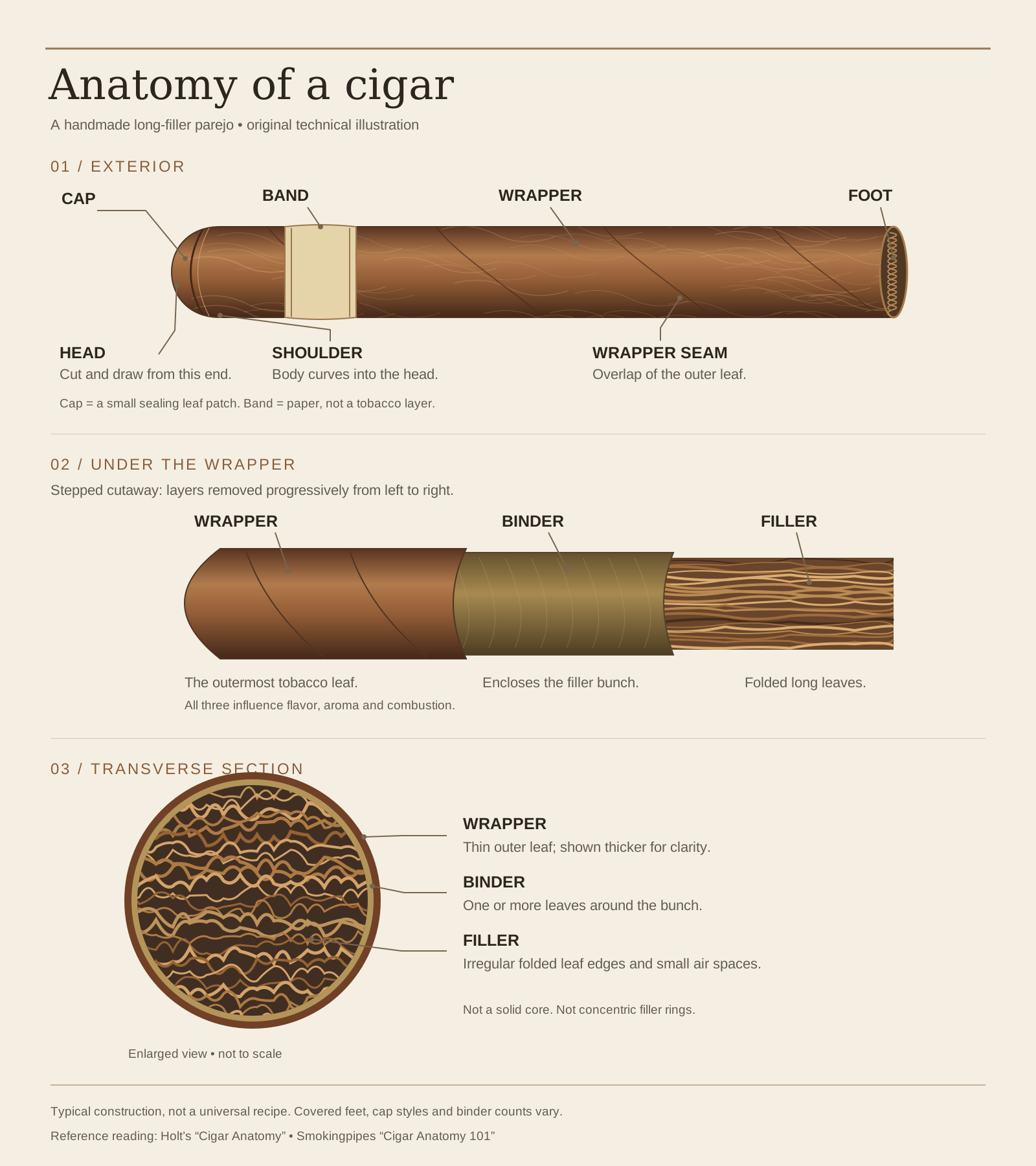
Head
The end placed in the mouth, normally closed by wrapper leaf before cutting.
Cap
The wrapper piece finishing the head. It may be flat, rounded, pointed, twisted, or formed into a pigtail.
Shoulder
The transition where a rounded cap meets the body. Cutting below it can allow the wrapper to unravel.
Body
The main length of the cigar. It may be round, pressed, tapered, curved, or irregular.
Wrapper
The visible outer leaf. Color, sheen, veins, seams, and texture are useful identification clues.
Foot
The end that is lit. It may be open, tapered, closed with wrapper leaf, or finished with a tobacco tuft.
Leaf by leaf
Construction & tobacco
Wrapper
The outermost leaf and the cigar’s visible finish. “Wrapper” can refer to the leaf’s origin or type—not merely its color.
Binder
The leaf beneath the wrapper that contains the filler bunch and helps the cigar hold its shape.
Filler
The tobacco inside. Its leaf varieties, primings, fermentation, aging, and arrangement influence combustion and flavor.
Long filler
Filler made primarily from whole or long leaves running through the cigar. Common in handmade premium cigars.
Short filler
Smaller pieces of tobacco used as filler. It can be intentional construction—not automatically a defect.
Puro
A cigar whose tobacco comes from one country. Some producers use the term more narrowly, so check the maker’s description.
Blend
The recipe of wrapper, binder, and filler tobaccos chosen to create a particular balance, strength, and progression.
Handmade vs. machine-made
Describes manufacturing method, not a complete quality judgment. Construction and materials still vary within either category.
Recognize the silhouette
Cigar shapes
Shape and size names overlap. A family may contain multiple formats, so rely on the cigar’s actual silhouette and dimensions when identifying it.
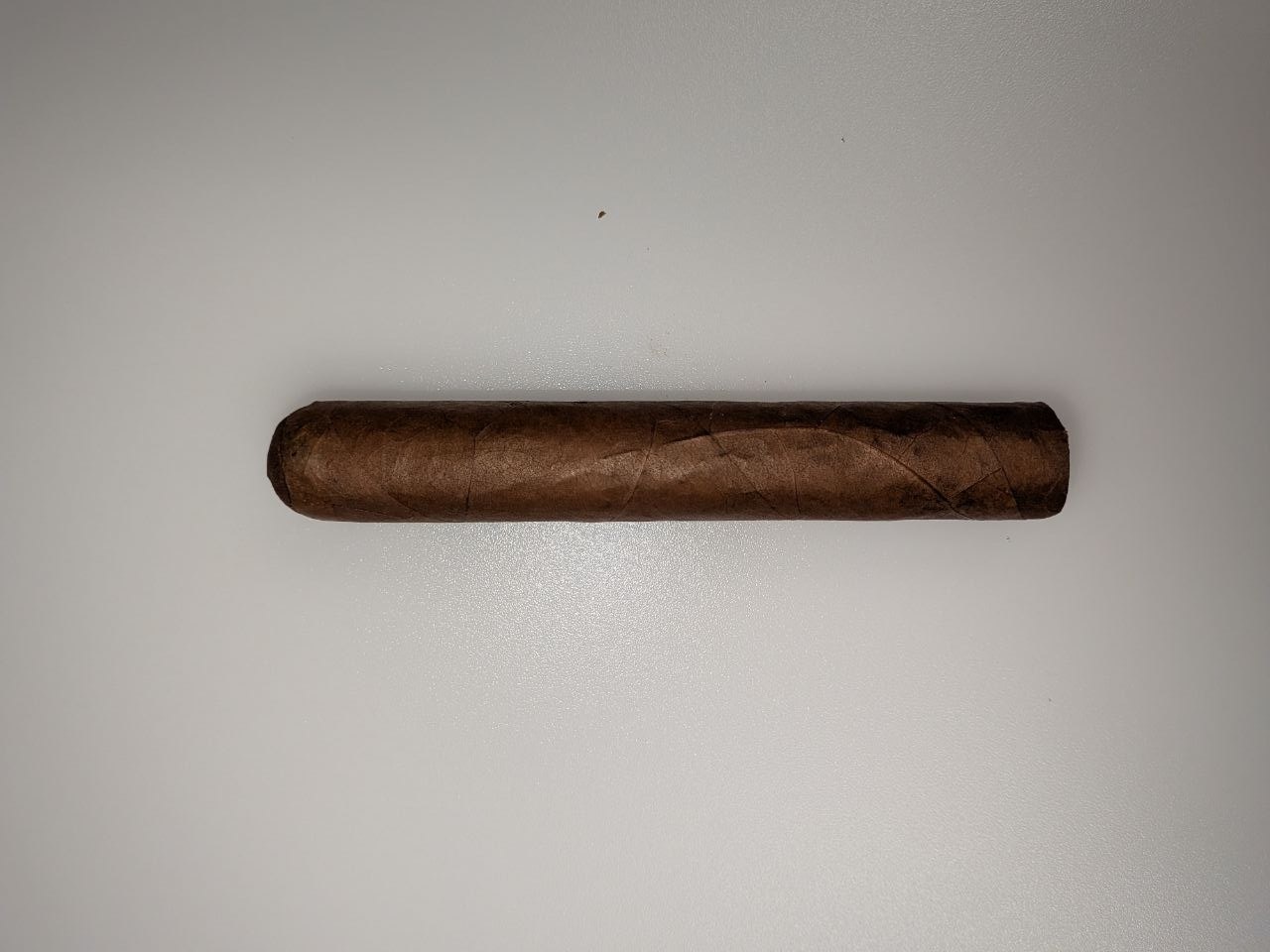
Parejo
Straight sides, a rounded capped head, and an open flat foot. Many familiar cigars belong to this broad family.
Figurado
An umbrella term for cigars whose shapes depart from a straight-sided parejo.
Torpedo
A straight or slightly swelling body with a sharply tapered, pointed head.
Pyramid
A broad foot gradually narrows for much of the cigar’s length toward a pointed head.
Perfecto
Tapered at both ends, often with a fuller middle and a small or closed foot.
Belicoso
Usually a shorter cigar with a rounded taper at the head rather than a needle-like point.
Salomon
A large perfecto-style shape, typically tapered at both ends with a substantial body.
Culebra
Three slender cigars twisted together into a distinctive braided form.
Box-pressed
A cigar pressed into a square or rectangular profile. Corners may be sharply defined or softly rounded.
Pigtail
A cap whose wrapper is twisted into a small tail. This is a cap treatment rather than a complete body shape.
Length and thickness
Sizes & ring gauges
Vitola names are conventions, not universal measurements. Dimensions are stronger clues. Ring gauge is measured in sixty-fourths of an inch: a 50 ring is 50/64 inch in diameter.
Petit Corona
Often around 4½ × 40–42
Corona
Often around 5½–6 × 42–44
Robusto
Often around 5 × 48–52
Toro
Often around 6 × 50–54
Churchill
Often around 7 × 47–50
Lancero
Often around 7–7½ × 38–40
Gordo
Often around 6 × 58–60
Presidente
A long, typically large-ring format; dimensions vary widely.
Visible outer leaf
Wrapper colors
Wrapper color does not reliably determine strength. Color terminology varies among manufacturers, so describe what you actually see.
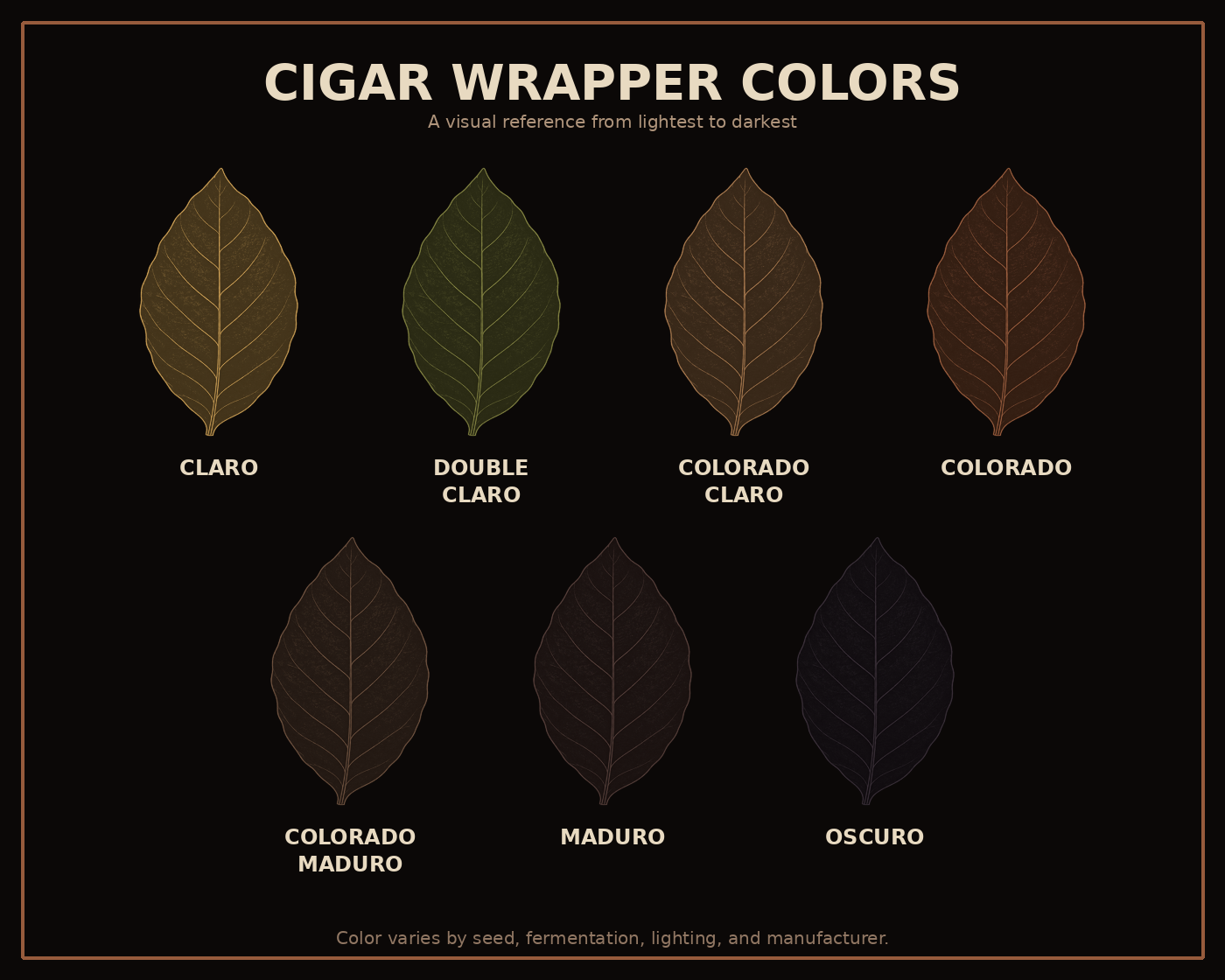
Candela
Green to olive; sometimes called double claro.
Claro
Pale tan or light golden brown.
Natural
Light to medium brown; a broad everyday description rather than one precise leaf type.
Colorado
Medium brown with a noticeable reddish cast.
Maduro
Dark brown. The term generally reflects processing and appearance, not a promise of strength or sweetness.
Oscuro
Very dark brown to nearly black, sometimes with purple-black tones.
Words you will hear
Cigar terms
Aging
Holding tobacco or finished cigars under controlled conditions so their characteristics can develop or integrate over time.
Ash
The mineral structure left after tobacco burns. Color and firmness can vary and are not a simple quality score.
Blend
The combination of wrapper, binder, and filler tobaccos used in a cigar.
Bloom / plume
A disputed term often used for crystalline residue associated with aging. Never use the label to dismiss fuzzy, spreading, colored, or musty growth; isolate suspicious cigars as possible mold.
Canoeing
An uneven burn in which one side advances substantially faster than the other.
Charring line
The narrow dark boundary between intact wrapper and ash at the burning end.
Cold draw
Drawing through a cut but unlit cigar to check airflow and perceive pre-light flavors.
Draw
The resistance and airflow experienced when pulling air through the cigar. It may be described as open, firm, tight, or plugged.
Fermentation
Controlled heat and moisture treatment of harvested tobacco that reduces undesirable compounds and develops aroma and character.
Finish
The flavors and sensations that remain after smoke leaves the mouth or after a draw.
First, second & final third
A convenient way to describe how a cigar changes through its length; the divisions are approximate, not physical seams.
Flag
A shaped end of wrapper leaf used by the roller to finish the cap.
Frontmark
A manufacturer’s name for a particular size or presentation within a cigar line.
Humidor
A container intended to maintain an appropriate environment for storing cigars.
Hygrometer
An instrument that measures relative humidity.
Ligero
Upper-plant tobacco leaves that receive more sun and are often thicker and more potent. The word does not describe an entire cigar by itself.
Long filler
Filler composed primarily of long leaves extending through much or all of the cigar.
Nub
The short remaining portion near the end of a cigar; also used in product names, so context matters.
Plug
An overly dense or obstructed area that restricts airflow through the cigar.
Priming
The leaf’s position on the tobacco plant and the harvest pass associated with it. Terms and practices vary by region.
Puro
Generally, a cigar made with tobaccos from one country. Usage can vary by producer.
Relative humidity (RH)
The percentage of moisture in the air relative to what that air can hold at the same temperature.
Resting
Allowing cigars time in stable storage after shipping or a climate change before smoking them.
Retrohale
Allowing some smoke to leave through the nose to perceive aroma. It is not inhaling into the lungs and can feel intense.
Ring gauge
Cigar diameter expressed in sixty-fourths of an inch. A 64 ring measures one inch across.
Short filler
Smaller pieces of tobacco used in the filler rather than predominantly whole-length leaves.
Strength vs. body
Strength commonly refers to nicotine impact; body describes the perceived weight or intensity of smoke and flavor. People and brands do not always use the terms consistently.
Tunneling
A burn problem where filler advances internally while the outer layers lag behind.
Tubo
A cigar packaged in an individual tube, commonly aluminum, glass, or another protective material.
Vitola
A size-and-shape classification. “Factory vitola” and the commercial frontmark may use different names.
When the smoke misbehaves
Common problems
Tight draw
First confirm the cut is open enough without going below the shoulder. The cigar may also be over-humidified or physically plugged. Gentle massage can sometimes help, but squeezing risks cracking the wrapper.
Loose or hot draw
Slow the pace and use gentler puffs. A very open draw, dry cigar, large cut, or construction issue can increase heat and reduce resistance.
Uneven burn or canoeing
Rotate the cigar, slow down, and allow a modest imbalance time to correct itself. If it continues, touch up only the lagging wrapper with a small amount of flame.
Tunneling
The filler is burning ahead of the wrapper and binder. Slow down, let the cigar cool briefly, and carefully relight the outer edge. Storage or construction may be contributing.
Cigar keeps going out
It may be smoked too slowly, be over-humidified, or have restricted airflow. Knock off loose ash, remove stale smoke with a gentle outward purge, and relight evenly.
Harsh, bitter, or too hot
Set the cigar down and let it cool. Short, frequent, aggressive puffs overheat tobacco. If the harshness persists, there is no obligation to finish it.
Wrapper is cracking
Rapid humidity changes, dryness, rough handling, or cutting below the shoulder can contribute. Avoid wetting the entire cigar; stabilize storage gradually.
Nicotine discomfort
Stop smoking, sit somewhere safe, and consider something sugary if appropriate for you. Seek medical help for severe or persistent symptoms. Never drive or operate machinery while dizzy or unwell.
Put the vocabulary to work
Ready to describe it?
You do not need the perfect term. Tell us what you remember and we will follow the useful clues.
Go to cigar search →